


AI is fundamentally reshaping game design roles in 2026, transitioning from a purely generative tool to an embedded creative assistant within the development pipeline. While AI automates repetitive tasks and accelerates prototyping, it is increasing the demand for human designers who can direct, validate, and curate AI output.
Here is how AI is shaping the future of game design roles:

1. Evolution of Key Design Roles
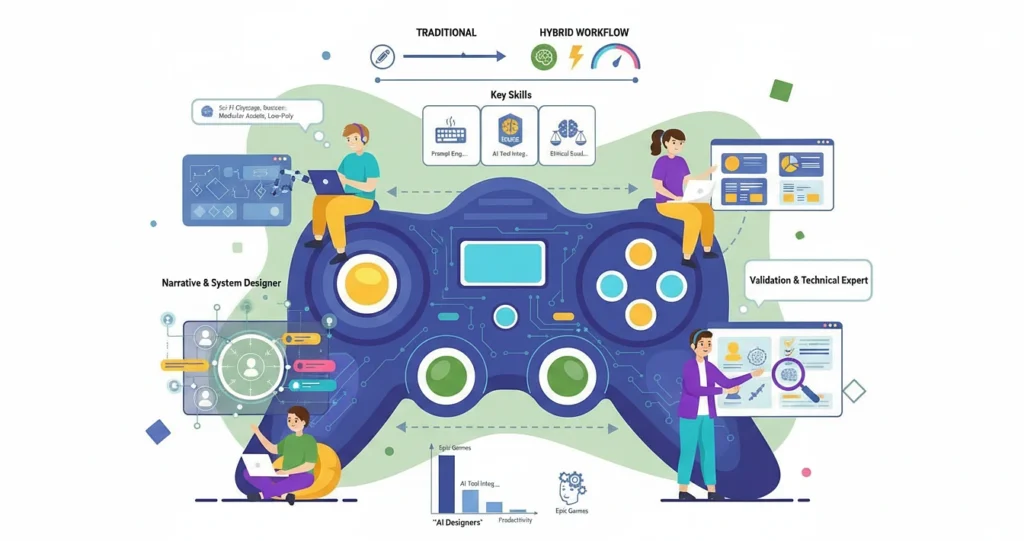
- AI-Assisted Designer: Designers are moving away from manual, iterative workflows toward AI-augmented production. The focus shifts to prompting AI for asset creation, concept art, and rapid level layout generation.
- Narrative and System Designers: Instead of writing every dialogue line, designers are managing generative systems that create dynamic, personalized NPC behaviors and storylines, requiring skills in systemic design and prompt engineering.
- Validation and Technical Experts: As AI takes over more execution, accountability for the final product remains with human designers. 56% of developers believe evaluating AI-generated output is the most critical baseline skill for 2026.
2. Shift Toward “Hybrid” Workflows
- Prototyping Speed: AI allows studios, both indie and AAA, to produce high-quality 3D models and conceptual assets in hours rather than weeks, accelerating the “fail fast, learn faster” design process.
- Hybrid Creativity: Industry trends point toward human-AI collaboration where AI acts as a brainstorming partner, helping designers overcome creative blocks rather than fully replacing human ingenuity.
3. Key Skills for Future Game Designers
- Prompt Engineering: Crafting precise, context-aware prompts for generative AI tools (e.g., Midjourney, Stable Diffusion) to align output with the creative vision.
- AI Tool Integration: Proficiency in using AI within existing engines like Unity and Unreal Engine to automate workflows and enhance in-game systems.
- Ethical Evaluation & Curation: The ability to spot potential bias in AI training data and curate outputs to ensure artistic consistency and human-centric design.
4. Impact on Job Demand (2026 Trends)
- High Demand for “AI Designers”: Roles like “Senior AI Designer” are increasingly common, focusing on behavior trees and systemic environments, as seen in openings at companies like Epic Games.
- Increased Productivity: 89% of designers report that AI has already impacted their role, with many using it as a “force multiplier” to manage complex, live-service games.
AI Shaping the Future of Game Design
| Design Area | Current Transformation | Future Outlook | Key Benefit |
|---|---|---|---|
| Asset Creation | Generative AI creates 2D/3D models, textures, and UI elements from text prompts. | Full game asset suites generated autonomously with human curation. | 40-80% reduction in modeling and texturing time. |
| World Building | Procedural Content Generation (PCG) builds vast, unique environments on the fly. | Real-time adaptive worlds that evolve based on player choices and interactions. | Infinite replayability with massive scale for smaller studios. |
| NPC Behavior | Smarter, unscripted Non-Player Characters (NPCs) use LLMs for natural dialogue. | Fully autonomous characters with individual “memories” and evolving personalities. | Deeper player immersion; 65% of players feel more engaged by smart AI. |
| Gameplay Experience | Dynamic Difficulty Adjustment (DDA) tunes challenges in real-time based on skill. | Hyper-personalized learning journeys and narratives tailored to each individual player. | Maximized player retention and engagement (up to 40% boost). |
| Testing & QA | Autonomous agents simulate millions of playthroughs to identify bugs and exploits. | Proactive, continuous validation that predicts potential errors before they occur. | 60% speedup in testing times and higher post-release stability. |
Emerging Industry Impact (2025–2035)
- Market Growth: The AI in game development market is projected to grow from $3.2 billion in 2025 to over $58 billion by 2035.
- Democratization: High-end production values are becoming accessible to indie developers, allowing them to compete with AAA studios by reducing technical overhead.
- New Design Roles: The industry is shifting from manual execution to a “director” model, where designers focus on strategy and prompt engineering rather than pixel-by-pixel labor.